Transforming Clinical Research: New Regulations Laid Before Parliament

Transforming Clinical Research: New Regulations Laid Before Parliament

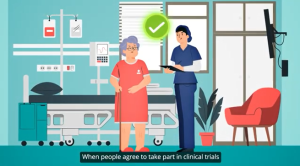
Today, the UK Government introduced a landmark framework for clinical trials to Parliament, paving the way for improved patient care, greater innovation in the NHS, and a thriving life sciences sector.

The new regulations aim to streamline trial processes, enhance safety and transparency, and accelerate the delivery of groundbreaking treatments. By modernizing the UK’s clinical trials landscape, this framework reaffirms the nation’s position as a global leader in cutting-edge medical research, ensuring patients benefit from the latest advances in healthcare.

The UK Registered CTU Network, which represents over 50 UK-accredited CTUs nationwide, welcomes this transformative initiative and looks forward to contributing to the development of the underpinning guidance.

The full government announcement can be read here.

Update from the PeRSEVERE Project

2024 has been a busy and important year for the PeRSEVERE (PRincipleS for handling end-of-participation EVEnts in clinical trials REsearch) Project.

Read on to find out more.

What is PeRSEVERE?

PeRSEVERE at the ICTMC 2024

PeRSEVERE Resources

Publications

CRF review & guidance


What is PeRSEVERE?

The PeRSEVERE project was started within the Registered CTU Network in 2019 to address the lack of detailed guidance for managing ‘withdrawal’ of consent and other participation changes in our trials. Participation changes can be complex, and it can be unhelpful to view them as binary – i.e. to view the only possible participation statuses as ‘taking part’ or ‘withdrawn’.

Motivated by what they thought shouldn’t be happening in their trials, a multi-disciplinary group came together to try to agree how participation changes should be managed. This eventually led to development of the PeRSEVERE guiding principles. The principles and all accompanying guidance and resources are available at https://persevereprinciples.org/.


PeRSEVERE at the 2024 International Clinical Trials Methodology Conference (ICTMC)

PeRSEVERE had several outputs at the ICTMC.

– They held another educational workshop to explore the PeRSEVERE principles and how they can be implemented in real-life scenarios.

– They presented a poster on how we have disseminated the broad range of guidance included in PeRSEVERE.

– A trial team at the Leeds CTRU presented a poster on implementing PeRSEVERE within their trial, with a specific focus on providing participants with the information they might want or need at the time they stop taking part.

The two posters can be viewed on the Leeds CTRU ICTMC page: https://lictrxictmc.my.canva.site/.


PeRSEVERE Resources

There are now 10 pages of resources available via the PeRSEVERE website: https://persevereprinciples.org/resources/.

These help CTUs implement the PeRSEVERE principles, and can be used either as they are in their downloadable form, or to inform development of local CTU templates or trial-specific documents.

The latest resources added are:

– Template study protocol content with suggestions for how the content about managing participation changes could be organised, and suggested wording.

– Two additional scenarios showing how the PeRSEVERE principles can help manage (or avoid) the sorts of complex participation change scenarios that can arise in trials. These scenarios were included in the ICTMC educational workshop mentioned above.


Publications

Two publications have so far come from the PeRSEVERE-related work on end-of-participation communications:

– A paper about their guidance and how it was developed with a group of public contributors

– A paper reporting the results of a survey of REC members for their views on the communications guidance

They are also working on a publication about the PeRSEVERE principles themselves and the public consultation they ran to inform their development.


CRF review & guidance

In another spin-off project from PeRSEVERE, members of the PeRSEVERE team and the Trial Methodology Research Partnership’s retention working group conducted a scoping review to see what data trial teams collect about participation changes. The initial results of this work were also presented at ICTMC. They will be used to generate some guidance for good practice in collecting data about participation changes, which will be shared with all CTUs in due course.


Red4Research 2024

The Red4Research campaign, launched in 2020, was initially created to honour the remarkable contributions of the clinical research community during the early stages of the pandemic. However, clinical research plays a vital role beyond times of crisis. The Department of Health and Social Care (DHSC) has emphasized that research is the most powerful tool for advancing healthcare by identifying new ways to prevent, diagnose, and treat disease.

We are encouraged by two government reports from the current and previous government that both highlight the importance of clinical research to the UK. In his 2023 review of clinical trials, Lord O’Shaughnessy highlighted the “success in early-stage and academic-led research [was] a strength to be celebrated”, recognizing initiatives like IMPACT and the Trials Acceleration Programme, that CTUs are involved in.

Similarly, Lord Darzi’s report on the NHS in England underscored the transformative power of research innovations to enhance treatment effectiveness and deliver solutions where they were previously unavailable. We welcome his focus on research and innovation as key drivers of improved patient care. His report also highlighted the critical role of clinical academics in bridging research and clinical practice, and stressed the need for a strong research workforce within the NHS, alongside a more prominent patient voice. A heartening recognition of the value of clinical research.

Today, Red4Research continues to serve as a platform to celebrate the work of everyone involved in clinical research, from participants to supporters and professionals. The contributions made by staff across the Network, who play a key role in world-class, practice-changing research that improves outcomes for patients and their families deserves to be loudly celebrated during this Red4Research.

New Chief Investigator Network Group (CING) Established

We are delighted to announce the creation of a new working group focused on developing and sharing best practice in building stronger relationships and collaborations between Clinical Trials Units (CTUs) and the Chief Investigator (CI) community in the conduct of clinical trials.

Following our call to Network CTU Directors in May 2024, the Network Executive appointed 10 CIs to work with the Network’s clinical director. Bringing together CIs from a diverse range of specialties and professional backgrounds, the Chief Investigator Network Group (CING) will work together to identify challenges and their solutions, develop resources to support the CTU-CI collaboration, identify approaches used by other networks, and work with the CTU Network Executive Group and Director.  CING is chaired by the CTU Network’s clinical director, Prof Rustam Al-Shahi Salman.

Prof Salman said, “By including a mix of medics and other healthcare professionals from a range of disciplines across the UK, we are able to more fully represent the diversity of the Clinical Investigator community.  Among us are experienced CTU Directors, clinical directors, and emerging CIs at the forefront of their careers. This diversity not only strengthens the group, but also enhances our capacity to tackle some of the complex practical issues relating to CI involvement in the conduct of non-commercial research in the UK.”

We look forward to sharing more about their activities over the coming months.

Clockwise from top left: Alastair D Hay, Katie Morris, Rona Smith, Amy Ahern, Rustam Al-Shahi Salman, Anna Kirby, Ashwin Dhanda, David Russell, Vikki Wylde, Tom Hellyer, Ceri Battle.

Guidance on Greener Monitoring Issued

The UK Registered CTU Network is delighted to announce the release of a new resource designed to help Clinical Trials Units (CTUs) minimise their carbon footprint, specifically in the area of academic clinical trial monitoring.

Travel for on-site monitoring is a major contributor to the carbon footprint of a clinical trial, thought to account for an estimated 10-15% of the total environmental impact. This newly published guidance, developed by the Network’s Monitoring Operations Group, offers a balanced approach to reducing carbon emissions whilst ensuring adherence to trial protocols, Good Clinical Practice, and regulatory requirements, alongside a risk-based approach to clinical trial monitoring.

The guidance provides actionable recommendations that can be applied at all levels of trial monitoring, from leveraging institutional sustainability policies to steps that individual staff members can take. It’s a practical tool for CTUs committed to conducting trials in an environmentally responsible manner.

Download your copy of the guidance here.

New QA and IS/Data Management Specialists sought for Network’s International Registration Review Committee

The UK Registered CTU Network is seeking highly experienced people with expertise in specific aspects of clinical trials to join its International Registration Review Committee.

The committee is responsible for reviewing all applications for new and ongoing membership and, as such, plays a pivotal role in ensuring that the Network continues to promote excellence and integrity in non-commercial research.

The successful candidates will have a wealth of experience, knowledge, and acumen within the field of non-commercial/academic clinical trials research, demonstrate an excellent understanding of best practice as well as current drivers for change.  They will also be able to provide specialist input in relation to either Quality Assurance or Information Systems/Information Technology and Data Management.

More detailed role descriptions, and information on how to apply, can be found below in the applicant information pack below.

As the collective voice of non-commercial and academic clinical trials units, the Network plays an important role in engaging with Government, funders, regulators, and patients to improve and strengthen clinical research in the UK. The Network is seen internationally as an exemplar for the development of national clinical trials support. It was established in 2007, and its members are committed to setting and sharing good practice and improving standards in clinical trials.

The UK Registered CTU Network is funded by its members, and major funders have representation on the Network’s Executive Group, this includes Cancer Research UK, NIHR, Versus Arthritis, Chief Scientist Office Scotland, and Health and Social Care Research Wales.

The deadline for applications is 6pm on 31 March 2026.

Report on the use of electronic safety reporting systems in clinical trials published

The “Smarter Ways of Working” Task and Finish Group was formed to address the need to develop and share best practice across the UK Registered CTU Network in relation to electronic serious adverse event (SAE) reporting systems.

One of the key objectives of this group was to understand current practice and share these findings with the wider UK Registered CTU Network community.

The group has now a published a report which summarises the key findings of a survey they conducted in late 2022 into the different approaches taken by Registered CTUs to the use of electronic reporting systems. This work will form the basis for future discussions on opportunities for development and collaborative activities in this area.

You can download a copy of the report here.

Updated Guidance on QA Oversight of Laboratories Published

Following a detailed review by a team of specialists from across the Network, the QA Operations Group has published updated guidance on QA oversight of laboratories.

This revised suite of materials provides guidance to CTUs assessing the suitability of laboratories processing and/or analysing samples used in clinical trials. It includes:

  • Guidance for CTUs assessing the suitability of Labs processing research samples
  • Guidance on training requirements for labs processing research samples
  • A flowchart for oversight of laboratories by CTUs
  • A Self-Assessment Questionnaire

We are very grateful for the assistance provided the MHRA in reviewing and updating this guidance, as well as the helpful feedback given by those who used the original versions.

New Data Archiving Guidance Published

Clinical trials units (CTUs) are involved in the running and oversight of clinical trials and other research studies. Documentation and data are produced for each study, and it is important to retain this for a period after the study ends to demonstrate good clinical practice. Wherever possible these documents and data should be stored in a format to facilitate more efficient reproduction of results.

This new guidance, published by the Data & IS Operations Group, outlines important points for CTUs to consider when creating an electronic archive for study-related data, metadata and associated documentation and may help units assess the ongoing suitability of their archiving policies and procedures.

You can download your copy of the guidance here.

Network becomes supporter of Concordat for the Environmental Sustainability of Research and Innovation Practice

What better way to mark World Environment Day 2024 than by becoming a supporter of the Concordat for the Environmental Sustainability of Research and Innovation Practice?

The UK Registered CTU Network is pleased to announce that it has become an official supporter of the UK research and innovation (R&I) sector’s voluntary environmental sustainability concordat.

Aims of the Concordat

The Concordat is the result of a collaborative project between key members of the research and innovation sector including, but not limited to, universities, research institutes and funders.

It represents a “shared ambition for the UK to continue delivering cutting-edge research, but in a more environmentally responsible and sustainable way”.

Through a series of key themes, the Concordat aims to ensure that future research endeavours are environmentally stable. whilst maintaining the UK’s position as a leader in research and innovation.

Priority areas

The concordat has six key areas for delivery:

  1. Leadership and system change
  2. Sustainable Infrastructure
  3. Sustainable procurement
  4. Emissions from business and academic travel
  5. Collaborations and partnerships
  6. Environmental impact and reporting data 

Ways to get involved

There are two ways to sign up to the Concordat – as a Signatory or as a Supporter. The Network has chosen to become a Supporter. This means we agree with the aims of the Concordat, but are unable to actively implement some of its priorities due to our role.

What does this mean for the Network?

In becoming a Supporter of the Concordat, we have stated our commitment to the following priority areas: Leadership, Emissions from Travel, and Collaborations & Partnership. We will report annually on our progress here on our website, as well as reporting to the UK Registered CTU Network Board.

Whilst we do not have direct responsibility for issues such as procurement and estate policies, we will provide our members with tools to help support them when engaging in discussion with their host organisations on these matters.

We will also continue to continue to support the development of the Carbon Foot Printing tool for trials and champion it’s use.

Find out more

  • To learn more about the aims and ambitions of the Concordat click here.
  • To download the Network’s official letter of support please click here.
  • You can find out more about World Environment Day, and this year’s theme of restoration, desertification, and drought resilience, here.

form

Get in touch

If you have any questions about the site, please feel free to contact us. We are always looking for ways to better serve our members - YOU are important to us!

(0113) 3439132

    Sign up to newsletter